Contemporary Watercolor and Sumi-Ink Portrait
Sumi-Ink Contours and Pigment Blooms for a Watercolor Ink Illustration Portrait
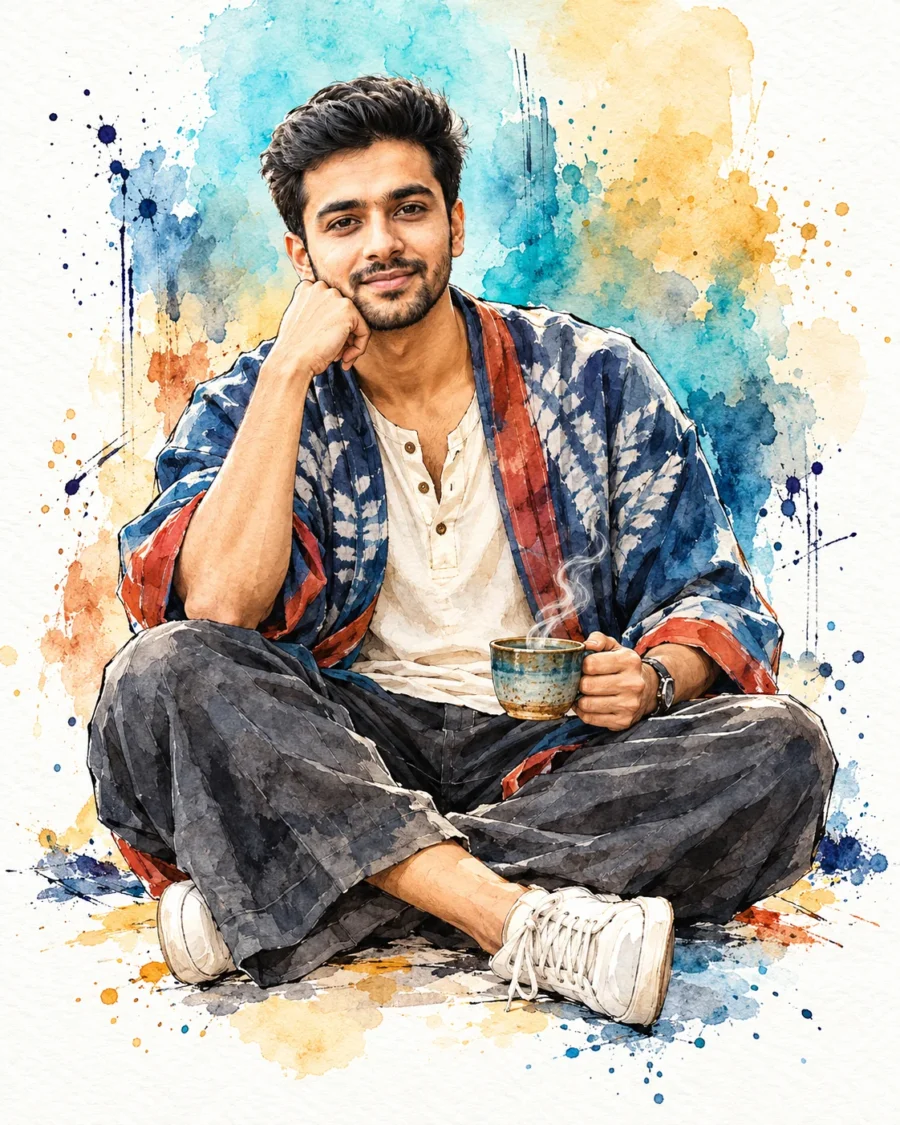
Executing an expressive Watercolor Ink Illustration Portrait presents a delicate balance between fine ink linework and fluid pigment dispersion. Generative engines frequently allow uncontrolled wet-on-wet pigment washes to bleed into facial features, blurring recognizable eye shapes and bone structure. Restricting loose bleeding blooms exclusively to the garments and background protects the clean linework around the nose, mouth, and eyes. This structural separation maintains authentic facial identity while preserving the spontaneous splatter and edge grain of traditional watermedia.
The composition relies on unpainted white paper highlights to establish high-key exposure across the bridge of the nose and cheekbones without harsh digital clipping. In traditional sumi-e and watercolor practices, leaving raw paper creates organic luminosity that artificial white pigment cannot replicate. Layering cool cobalt and burnt sienna in shadow zones produces optical depth across the indigo shibori jacket while preventing flat muddy tones. Anchoring the cross-legged figure against clean negative space directs visual focus inward toward the delicate steam wisps.
Modify the visual mood by replacing these specific tokens:
- Replace “relaxed indigo shibori-dyed kimono-style jacket with terracotta-red accents” with “ochre raw-silk kurta with fine kalamkari hand-block motifs” to introduce South Asian artisan textile heritage.
- Swap “handcrafted stoneware teacup at waist height, natural fingers, with curling ink-drawn wisps of steam” with “vintage brass filter coffee tumbler with faint watercolor steam rings” to ground the setting in a morning ritual.
- Change “Abstract watercolor wash backdrop of turquoise, pale gold, and indigo pigment pools” to “sepia and raw umber wash pools with faint graphite pencil hatchings” for an archival monochromatic palette.
For precise likeness preservation in a Watercolor Ink Illustration Portrait, upload an eye-level reference photo framed from the chest up under soft, diffused daylight. Clear facial contours with open eyes ensure the model generates sharp ink line weights rather than smudged pigment patches across the cheeks. Because loose paint algorithms often distort complex hand anatomy around crockery, fingers can merge directly into the ceramic rim. Add the exact phrase “crisp negative space between fingers” to maintain natural knuckle articulation.
Frequently Asked Questions
How do I stop watercolor pigment blooms from bleeding into facial features?
Keep the facial prompt tokens separate from ambient washes by specifying ink contours exclusively for the head. Adding "clean unpainted skin plane" reinforces a barrier between detailed sumi-ink linework and loose wet-on-wet pigment pools.
Why does the 4:5 aspect ratio sometimes crop the cross-legged seated pose?
Full-length floor poses in 4:5 framing can push knees outside the bottom border if headroom is excessive. Replace the framing token with "complete seated figure with generous white margin below knees" to restore balanced vertical breathing room.
Related Prompts
View All in Collection