
Most lehenga prompts collapse under their own ambition. They pile on adjectives like “gorgeous” and “stunning” and expect the AI to fill in the actual design work. It won’t. What separates a flat, generic-looking output from something you’d mistake for a real fashion campaign shot is specificity: the exact fabric, the exact embroidery technique, the exact regional silhouette.
That’s the whole premise of this guide. Each prompt below names real textile terms (zardozi, gota-patti, dabka, abhala bharat) instead of vague ones, because the model actually has training data tied to those words. Vague input gets vague fabric. Precise input gets something with actual weight and drape.
All five templates also open with an identity-preservation clause, which matters more than people expect. If you’re generating a portrait from an uploaded reference photo, skipping that instruction is the single most common reason the face comes out looking like someone else entirely.
Why Fabric-Specific Language Changes the Output
Here’s a quick test. Ask an AI model for “a red lehenga with gold embroidery” and you’ll get something serviceable but forgettable. Ask for “burnt-terracotta raw silk with dense gold dabka and marodi needlework depicting lotus blooms” and the texture, sheen, and embroidery density all shift dramatically.
That’s not a coincidence. Diffusion models trained on fashion photography associate specific craft terms with specific visual patterns. Dabka reads as raised metallic coilwork. Zardozi reads as dense, structured gold thread. Gota-patti reads as flat metallic ribbon appliqué. Use the generic word “embroidery” and the model has to guess which one you mean, so it averages all of them into something bland.
The same logic applies to setting and lighting. “A palace at sunset” is a coin flip. “The sun-warmed laterite and granite facade of an ancient palace estate” gives the model an actual surface texture and color temperature to render.
5 Ready-to-Use Lehenga Prompts
Each of these was built around a distinct color story and regional textile tradition. Swap the color palette or setting if you want, but keep the layered structure: identity lock first, then fabric and embroidery detail, then setting and light.
1. Midnight-Navy & Antique Silver Velvet
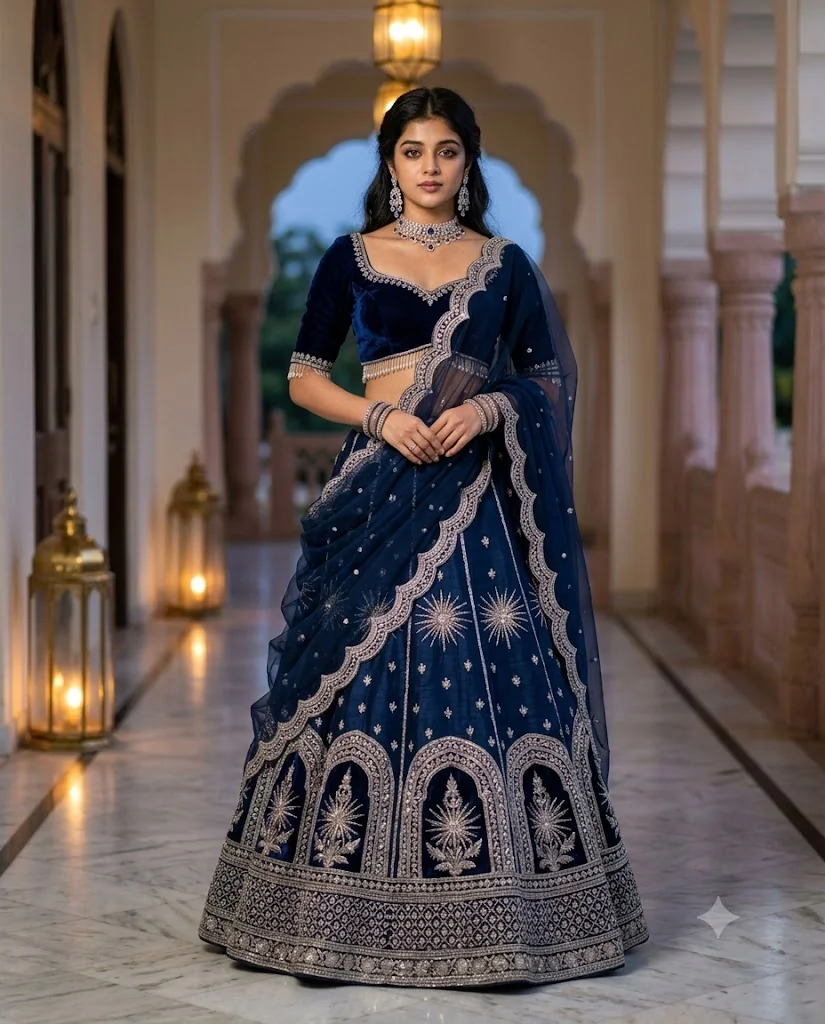
Built for a nighttime, regal mood. The celestial and Mughal-arch motifs give the embroidery a specific visual language instead of a generic “fancy pattern.”
Generate a full-body fashion portrait of the uploaded woman wearing an opulent midnight-navy blue raw silk and velvet lehenga with heavy antique silver and platinum zardozi embroidery in celestial starburst and mughal arch patterns. Preserve the exact facial identity, facial structure, facial proportions, body proportions, physique, height, skin tone, age, and all distinctive physical characteristics of the subject. The voluminous flared skirt is paired with a tailored elbow-sleeve navy velvet blouse featuring a sweetheart neckline and delicate silver bullion fringe along the hem, complemented by a sheer navy tulle dupatta with scalloped silver zari borders draped diagonally across her torso. She wears polki diamond-and-sapphire chandelier earrings, a matching choker, and stacked silver kadas, with a refined regal expression and direct eye contact. She is standing gracefully on the polished marble veranda of a heritage palace at twilight (blue hour), with glowing brass hanging lanterns and arched corridors softly blurred in the background. Balanced evening ambient lighting with gentle warm rim highlights, rich fabric texture, shallow depth of field, 85mm DSLR fashion photography, 8K. Aspect ratio 4:5.
Why it works: Blue hour lighting is doing double duty here. It’s dark enough to make the silver embroidery pop under the lantern glow, but bright enough that the model doesn’t lose facial detail to shadow.
2. Emerald-Green & Gold Temple Brocade
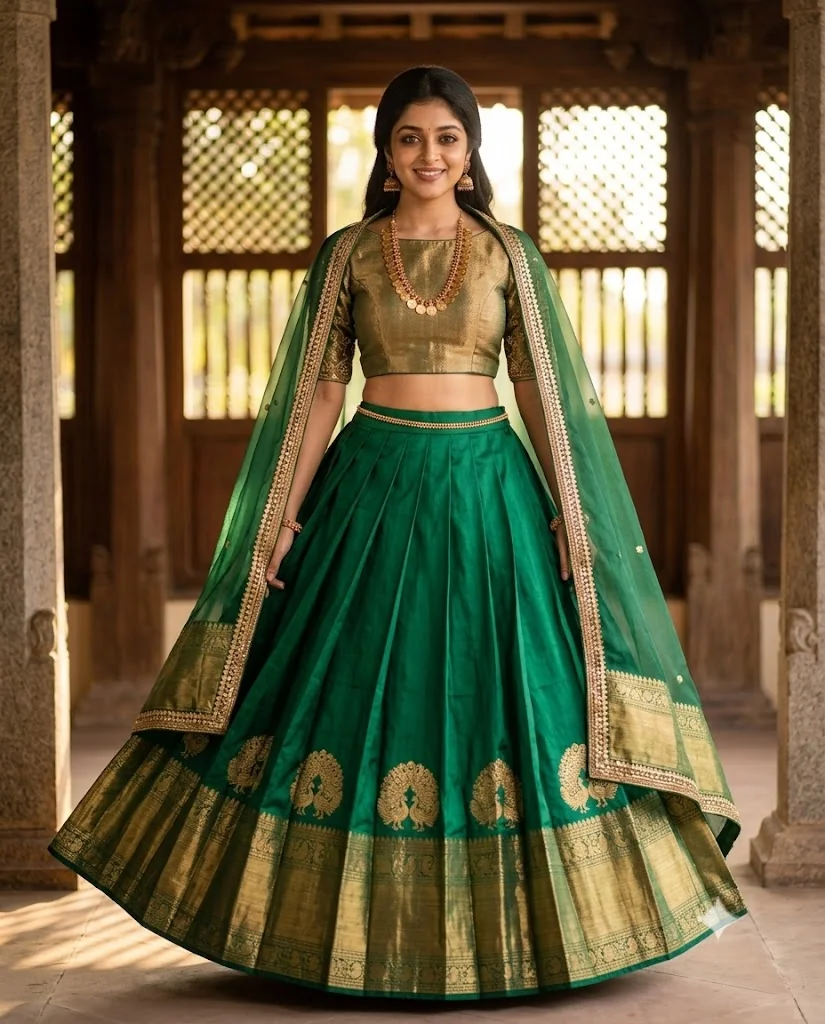
This one leans into a specific regional identity rather than a generic “traditional” look, and the result reads far more authentic for it.
Generate a full-body fashion portrait of the uploaded woman dressed in a magnificent jewel-toned emerald-green Kanchipuram silk lehenga with heavy woven 24k gold zari temple-border motifs and dancing peacocks. Preserve the exact facial identity, facial structure, facial proportions, body proportions, physique, height, skin tone, age, and all distinctive physical characteristics of the subject. The flared knife-pleated skirt is paired with a structured boat-neck metallic gold tissue blouse with zardozi-embroidered sleeves, and a sheer forest-green organza dupatta with wide gold gota-patti borders draped gracefully over both shoulders like a royal cape. Accessorized with antique gold temple jewelry, a traditional kasumala coin necklace, ruby-studded jhumkas, and a slender gold waist chain (kamarbandh), she offers a warm, poised smile while lightly lifting one side of the flared skirt in a natural step. The setting is the hand-carved teakwood courtyard and stone pillars of a traditional Kerala heritage palace, with warm morning sunlight streaming through wooden lattice screens in soft, dreamy bokeh. Crisp silk weave, lifelike skin texture, editorial luxury aesthetic. Aspect ratio 4:5.
Why it works: “Lightly lifting one side of the flared skirt in a natural step” gives the model a reason for the skirt to have movement and asymmetry, instead of hanging in a stiff, static cone shape, which is a common tell in AI-generated lehenga shots.
3. Crimson & Burnt-Terracotta Silk
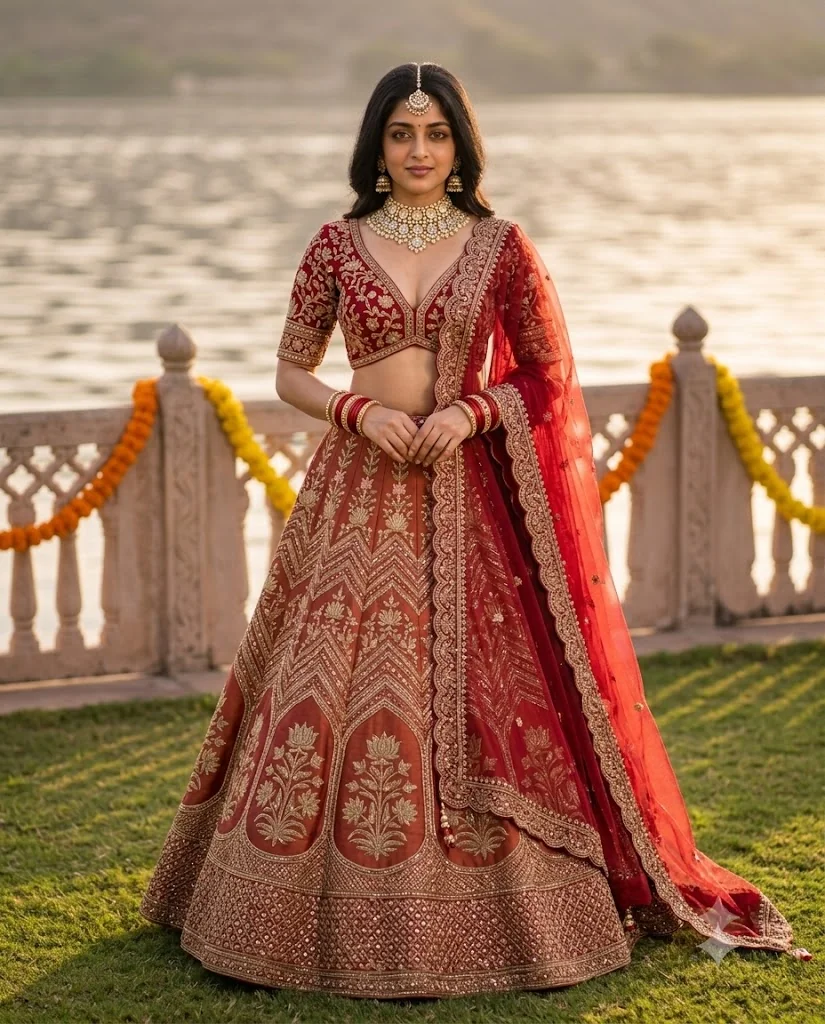
The most dramatic of the five, built for strong contrast and a confident, editorial pose rather than a soft, demure one.
Generate a full-body fashion portrait of the uploaded woman wearing an opulent deep crimson-red and burnt-terracotta raw silk lehenga featuring dense gold dabka, marodi needlework, and micro-pearl embroidery depicting royal floral vines and lotus blooms. Preserve the exact facial identity, facial structure, facial proportions, body proportions, physique, height, skin tone, age, and all distinctive physical characteristics of the subject. The dramatic, heavy double-can-can flared skirt is paired with a fitted plunging V-neck choli with intricate sleeve embroidery, and a sheer crimson net dupatta with heavy scalloped borders draped over one shoulder and cascading behind her. She wears an elaborate uncut-diamond kundan choker, matching maang tikka, statement jhumkas, and red-and-gold glass bangles, standing with proud posture and a captivating, confident expression. The scene is set on the lush manicured lawns of a waterfront palace during golden hour, with antique stone balustrades, hanging marigold festoons, and calm rippling water in creamy background bokeh. Warm, low-angle natural sunset light, deep contrast, ultra-detailed embroidery textures, photorealistic DSLR quality. Aspect ratio 4:5.
Why it works: Naming “low-angle” light specifically tells the model where shadows should fall on the embroidery’s raised texture, which is what makes dense needlework actually look three-dimensional instead of printed flat onto the fabric.
4. Ivory & Champagne Mirror-Work Organza
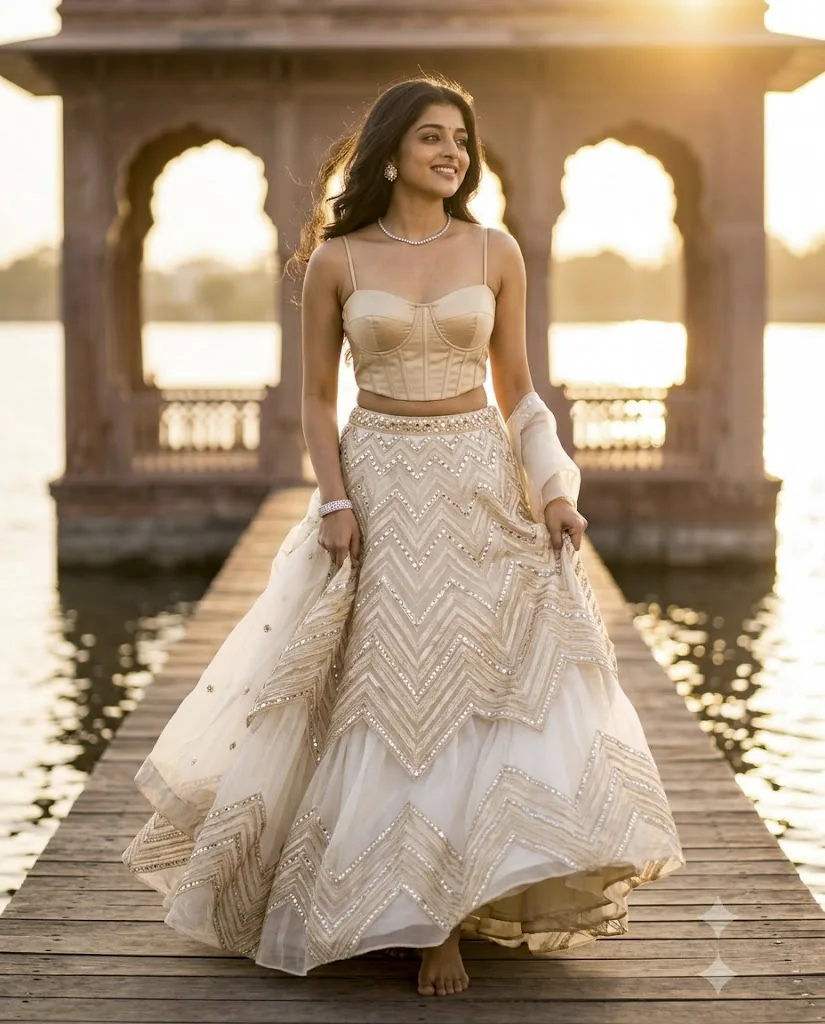
A lighter, more contemporary silhouette. This is the prompt to reach for when you want bohemian movement instead of stiff formality.
Generate a full-body fashion portrait of the uploaded woman dressed in an ethereal ivory-white and champagne-gold tiered organza lehenga adorned with intricate real-glass mirror-work (abhala bharat) and fine champagne resham threadwork in geometric chevrons. Preserve the exact facial identity, facial structure, facial proportions, body proportions, physique, height, skin tone, age, and all distinctive physical characteristics of the subject. The lightweight, billowing tiered skirt is paired with a modern strappy corset-style champagne silk blouse, with a feather-light translucent tissue dupatta draped effortlessly over one forearm. Her long dark hair flows in romantic, wind-swept waves, styled with minimal polki diamond studs, a sleek diamond tennis necklace, and an open platinum cuff bracelet. She stands barefoot on the rustic teakwood boardwalk of a waterside heritage pavilion at sunset, holding the edge of her fluttering skirt with a serene, effortless smile looking slightly away from the camera. Glowing sunset backlighting creating a golden halo around her silhouette, shimmering water reflections in soft bokeh, high-end bridal editorial aesthetic. Aspect ratio 4:5.
Why it works: Backlighting plus mirror-work is a deliberate pairing. Real glass mirror embroidery catches and scatters light, so placing the sun behind the subject gives the model a physical reason to render those little glints across the skirt.
5. Dusty Plum-Wine & Rose-Gold Metallic Shimmer
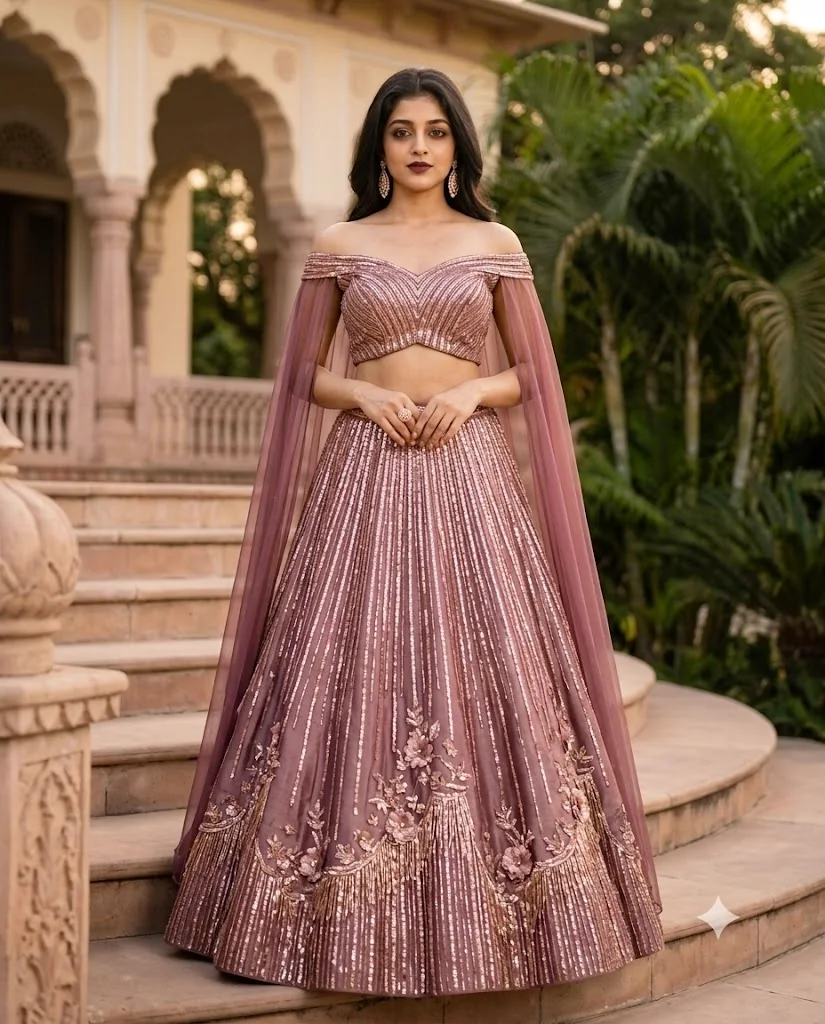
The most contemporary of the set, built for a haute-couture campaign feel rather than a classic bridal one.
Generate a full-body haute-couture fashion portrait of the uploaded woman wearing a glamorous dusty plum-wine and rose-gold metallic tissue-silk lehenga. Preserve the exact facial identity, facial structure, facial proportions, body proportions, physique, height, skin tone, age, and all distinctive physical characteristics of the subject. The structured flared skirt is embellished with cascading linear rose-gold sequin embroidery, metallic bugle-bead (cutdana) fringe work, and 3D floral thread appliqués, paired with an off-the-shoulder structured sweetheart blouse and an attached sheer cape-style dupatta that drapes dramatically down her back. Styled with modern rose-gold and uncut diamond chandelier earrings, a cocktail ring, refined smokey eyes, and deep matte-berry lips, she poses with regal confidence at the top of a grand outdoor curved stone staircase. The setting features the sun-warmed laterite and granite facade of an ancient palace estate, with lush tropical palms and grand carved arches melting into a rich, creamy evening blur. Diffused golden-hour studio-level natural lighting, crisp fabric sheen, tactile embroidery detail, premium fashion campaign photography. Aspect ratio 4:5.
Why it works: Positioning her at the top of a staircase isn’t just visual drama. Elevated poses naturally lengthen the line of a flared skirt in-frame, so the lehenga silhouette reads properly instead of getting cropped or foreshortened.
What Makes a Lehenga Prompt Actually Work
You don’t need to memorize embroidery vocabulary to get good results. You need a repeatable checklist.
- Name the fabric, not just the color. “Raw silk,” “organza,” “tissue-silk,” and “velvet” all behave differently under light. The model needs to know which one you mean.
- Pick one embroidery technique and commit to it. Zardozi, dabka, gota-patti, and mirror-work each produce a distinct texture. Mixing five terms into one prompt just muddies the output.
- Give the pose a reason to move. A hand lifting the skirt hem, a step forward, wind on the dupatta. Static, frontal poses are what make AI fashion shots look stiff.
- Match your lighting direction to your embroidery. Backlighting flatters mirror-work and sheer fabric. Low-angle sunset light flatters raised, dense needlework.
- Always lock the aspect ratio. For full-body fashion portraits, 4:5 consistently outperforms square or landscape framing because it matches how the eye reads a standing figure.
If you’re building out a full content series, check out our Sarees collection, which covers the same identity-lock and fabric-specificity principles for draped garments. And for background on how diffusion models interpret texture and material cues, OpenAI’s guide to prompting for image generation is worth a read.