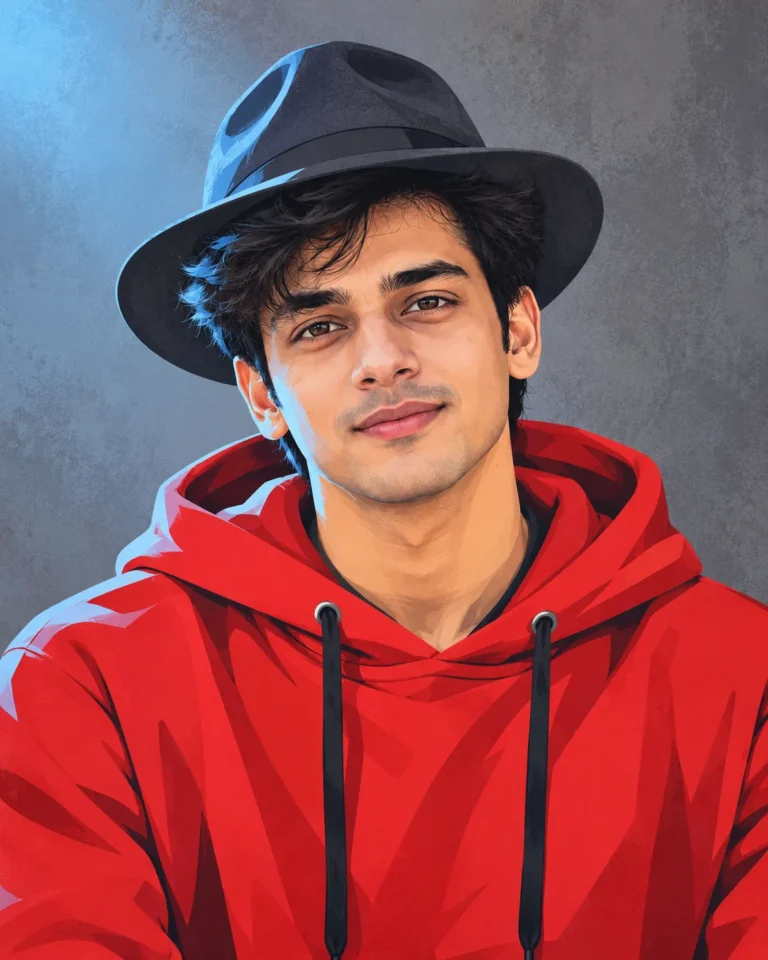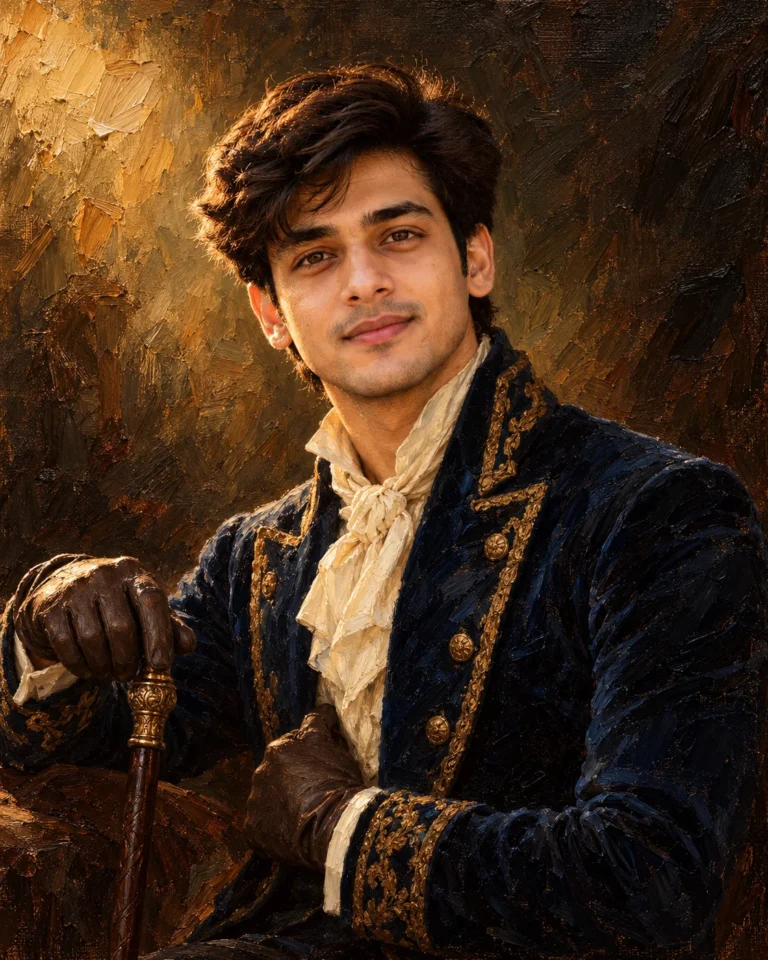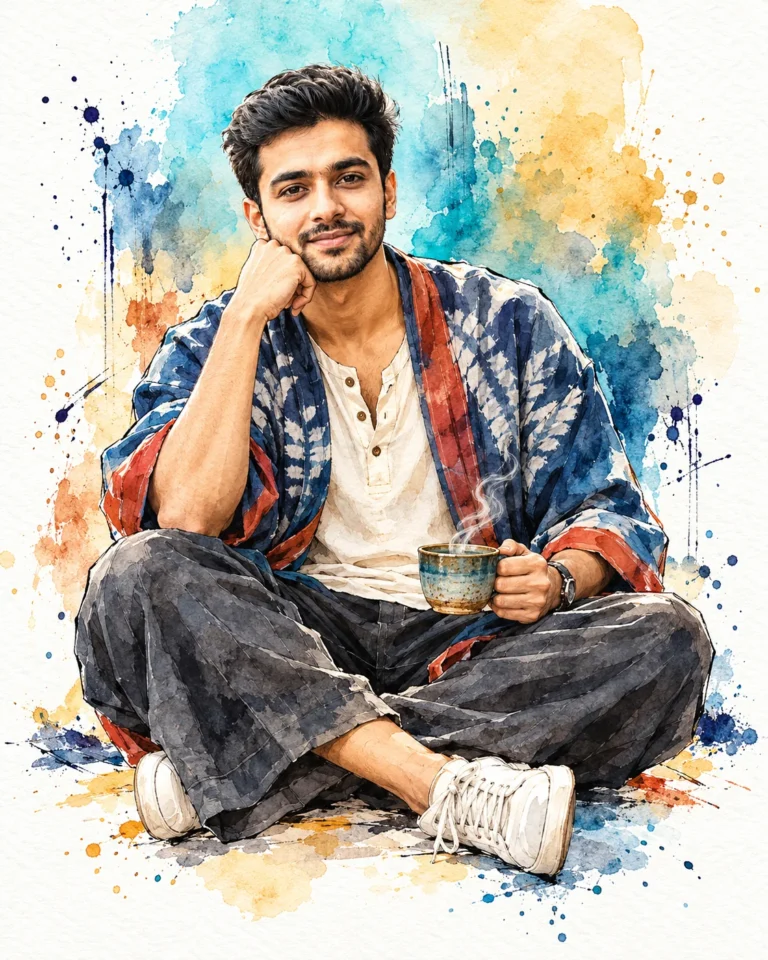
Sepia Ink Wash Illustration Portrait with Antique Spyglass

Crosshatching Mechanics and Paper Tooth for a Sepia Ink Wash Portrait
Executing a detailed Sepia Ink Wash Portrait presents a delicate challenge in preventing fluid watercolor washes from bleeding into precise steel-nib crosshatching. Generative engines frequently dissolve fine facial linework into muddy monochrome blobs when balancing dense shadow washes. Specifying bare cream vellum highlights on the lit cheekbone preserves facial geometry and authentic likeness. This technical separation maintains tactile nib precision across the eyes while letting rich burnt-umber washes pool naturally across the torso.
The composition balances dramatic side-top illumination against dense crosshatching to carve out physical depth across a flat parchment plane. Leaving unpainted paper along the brow and shoulders replicates traditional archival drafting methods without relying on harsh digital whites. Layering transparent bistre pigment into layered crosshatched shadows defines the coarse weave of raw linen and tailored wool breeches. These traditional ink techniques align with fine-art illustration methods to produce authentic historical tactile grain.
To adapt this historical explorer aesthetic for different narratives, substitute these specific tokens:
- Replace “natural raw-linen band-collar shirt with lace-up chest ties and billowed sleeves” with “heavy charcoal wool naval pea coat over a ribbed cream fisherman sweater” for a rugged seafaring look.
- Swap “collapsible antique brass spyglass in his hands” with “hand-drawn navigational maritime chart and brass dividers” to shift the nautical role.
- Change “swirling sepia ink washes, faint hand-drawn celestial compass arcs, and organic parchment paper grain” to “faint architectural blueprint grid lines and indigo pigment pools” for an alternative studio atmosphere.
For precise facial likeness preservation in a Sepia Ink Wash Portrait, upload an eye-level reference photo framed from the chest up in clean, diffuse daylight. Avoid portraits with harsh overhead shadows that confuse the engine when mapping steel-nib crosshatching across facial planes. In full-length seated compositions, generative tools occasionally merge the brass spyglass cylinders directly into the fingers. Add the exact phrase “crisp brass cylinder edge separation” to preserve clean hand anatomy and prop contours.
Related Prompts
View All in Collection